When and for what purpose do we perform an abdominal MRI scan?
Abdominal MRI is primarily used to evaluate the following organs: kidneys, pancreas, spleen, liver, gallbladder, stomach, intestines, ureters and adrenal glands. Within an MRI scan, the diagnostician usually focuses on imaging a specific organ, as well as evaluating the vessels and lymph nodes of the examined area.
Abdominal MRI can diagnose abnormalities, but it is also used to monitor treatment and disease progression, prepare for surgery, assess the extent of internal injuries or for post-transplant follow-up.
What are the indications for an abdominal MRI?
Indications for abdominal MRI include:
- Tumors of abdominal organs and retroperitoneal space,
- vascular malformations,
- echinococcosis,
- Diagnosis of liver disease in case of an inconclusive ultrasound result,
- bile duct stones,
- Urinary tract stones (especially with the presence of non-calcified deposits that were not visualized on CT scan),
- Crohn’s disease,
- The presence of suspicious inflammatory lesions.
What is the course of the examination? How should I prepare for an abdominal MRI?
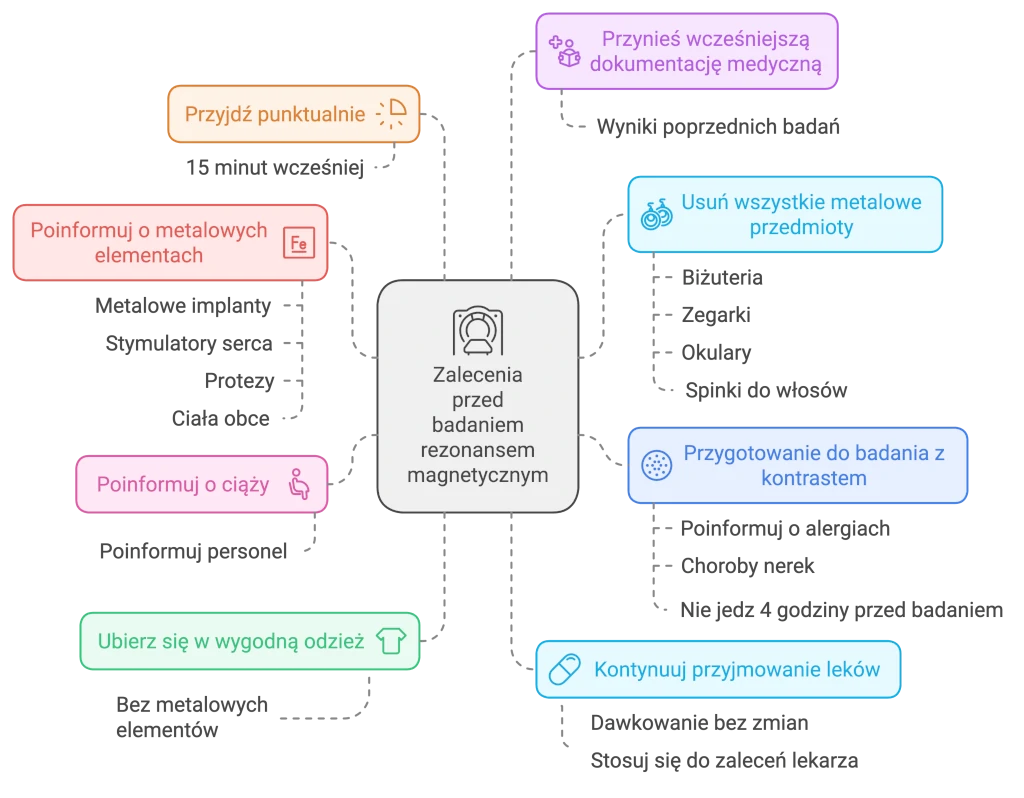
Abdominal MRI can be performed with or without contrast. Regardless of which method of examination is to be carried out, the patient should properly prepare for the visit to the abdominal MRI laboratory.
During the last few hours before the MRI, one should not eat. However, you are free to drink non-carbonated water before the test, and take regular medications if necessary.
An abdominal MRI takes several tens of minutes and requires a fixed position. The patient remains clothed during the examination, so his or her attire must also meet special requirements. For
What are the contraindications to abdominal MRI?
Abdominal MRI is an examination that is generally very safe. However, there are
- Pregnancy – usually RM is not performed in the first trimester;
- Allergy to contrast – if it is to be administered;
- a recent biopsy of the organ under study – hematomas and healing processes can distort the image obtained by MRI; the latter should therefore take place no earlier than 6-12 weeks after the biopsy (the exact time depends on whether it was a fine-needle, thick-needle or open biopsy);
- implanted pacemaker, neurostimulator, cardiodefibrillator, insulin pump or cochlear implant – the strong magnetic field generated during RM interferes with the function of these devices;
- The presence of metal implants or foreign bodies made of ferromagnetic materials – the magnetic field in question can cause tissue-damaging sliding of objects such as shot, bullet fragments, metal filings in the eye (e.g., in turners or locksmiths), vascular clamps and clips, or endoprostheses.
NOTE: Most modern items intentionally placed inside the human body are now made of materials that do not become magnetized, so they are not a contraindication to MRI either. However, it is necessary to have with you documentation indicating exactly what they are made of.
Preparation for MRI examination – general recommendations