
MRI – the most important information
The MRI examination is comfortable, completely non-invasive and painless. The average examination time is 30-40 minutes. However, some examinations require more time.
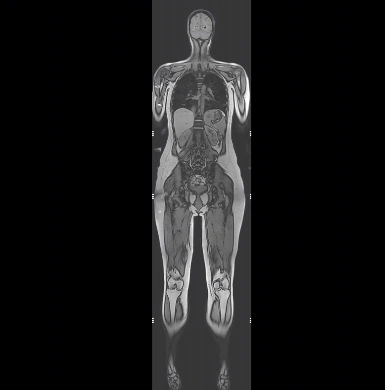
During magnetic resonance imaging (MRI), we use a high-powered magnet, radio waves and an advanced computer to take extremely detailed and precise images of the body part being examined. This accuracy helps in the early detection of diseases, injuries and pathologies, allowing us to make an effective diagnosis and begin treatment planning.
Depending on the decision of the radiologist, contrast may be administered during the MR examination to identify the lesion in question more precisely. It is also necessary for oncological evaluation of the images obtained. The contrast is administered intravenously using a previously placed venflon. W price list you will find the price of contrast and information for which examinations its administration is recommended or indispensable.
MRI is an accurate, modern and non-invasive examination. The prices of the tests depend on their specifics and range from several hundred to several thousand zlotys.
What are the contraindications to MR?
The main component of the MR apparatus is a strong magnet. This means that there is a continuous strong magnetic field in the area of the apparatus. As a result, people who have metals in their bodies that exhibit ferromagnetic properties (i.e., metals that are “attracted” in a magnetic field) are often unable to perform such an examination. However, the decision to waive the test is made after a thorough analysis of the composition of the implant in question. It may turn out, for example, that an implant is not a contraindication to an MRI scan and the patient in question can easily benefit from such a service.
The above situation primarily affects people:
- having implants containing metals in their composition,
- Those with a pacemaker, cochlear implant or insulin pump,
- having various types of metal objects that are indelible from the body,
- Women who are in the first trimester of pregnancy.
How to prepare for an MR examination?
The test does not require special preparation. However, there are some important points to keep in mind:
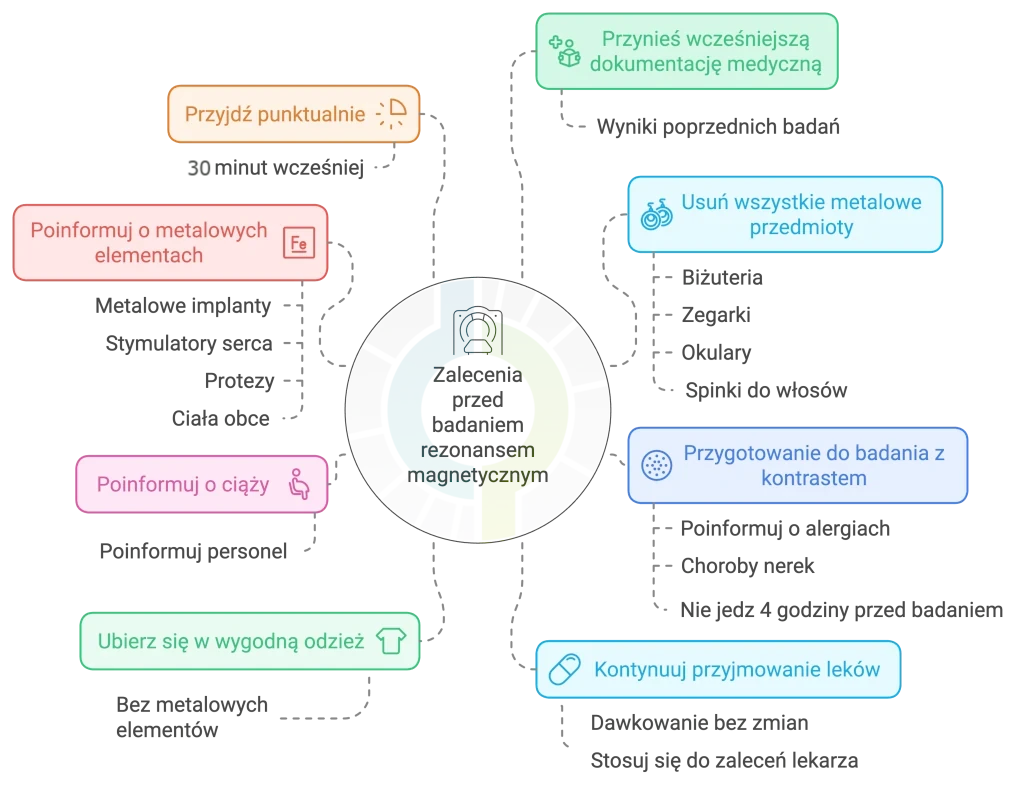
- If there is any metal component, implant, pacemaker, etc. in your body. – inform us about it and bring with you a certificate of no contraindication to the test or a special passport/document for e.g. an implant, which describes the specifications and includes information about the composition of the aforementioned implant.
- When preparing for the examination, pay attention to whether your outfit has no metal elements, i.e.: metal zipper, lock, buttons, jewelry, etc. If so, take with you, for example, tracksuits for changing, or if you don’t have clothes without metal elements, don’t worry about it – you will receive a special disposable apron, which will make you feel comfortable during the examination.
- If your test will require the administration of a contrast agent, a minimum of 3 hours before the test you should not consume food or drink. In which examinations is contrast almost always required? This is abdominal MR, prostate MR, breast MR, in follow-up examinations – which have also previously had a contrast agent administered.
- If the head is going to be examined, one should not spray hair, apply cosmetics to the face, paint the eyes – this is due to the fact that the above-mentioned cosmetics very often contain metal particles that interfere with the examination.
What should I bring with me to the MR examination?
First of all, you should have an identity card. In addition, you should bring with you all documentation regarding, for example, hospital treatment, previous examination descriptions, along with CDs regarding the particular area to be examined.
You should also have an up-to-date (i.e., no older than 2 weeks) creatinine result – this is essential when deciding whether to administer contrast during the study.
MRI – frequently asked questions(FAQ)
1. what is an MRI?
MRI is a medical imaging technique used in medicine to create images of the body’s anatomy and physiological processes. RM machines use strong magnetic fields, magnetic field gradients and radio waves to generate images of organs in the body. RM does not use X-rays or ionizing radiation, which distinguishes it from CT and PET (positron emission tomography) scans.
2. for what purpose is an MRI scan performed?
Magnetic resonance imaging is used to evaluate organs and tissues in the body to accurately assess the structures under study and diagnose diseases, conditions and injuries.
3. is MRI safe?
MRI is a completely safe test, and no noticeable side effects have been found after the scan. An extremely rare risk is allergy to the contrast agent (CAR), which is administered during some examinations. A very small percentage of people are allergic to the substance contained in the MPC for MR. In addition, implants and other non-removable metals and electronic devices in the body pose health and life risks and may exclude some patients from safely undergoing an MR examination.
4. how to prepare for an MRI scan?
For each study, you should bring with you:
- ID,
- referral (if issued),
- previous medical records pertaining to the area under study (hospital discharges, previous imaging studies, medical appointment cards, oncology history, etc.),
- clothes without metal elements,
- and preferably come without makeup and remove jewelry before the examination.
For examinations with contrast agent administration, the patient will be asked:
- Not eating 5 hours before the test,
- Current (maximum two-week) creatinine and eGFR results,
- In some examinations (e.g.: pelvis, uterus, prostate), we also ask for intestinal laxation with preparations available in pharmacies,
- for breast examinations, please discontinue hormonal contraception prior to the examination, especially for non-specific breast changes;
5. do I have to stop taking my regular medications before the test?
Each patient should take their medications as prescribed by their doctor.
6. am I exposed to radiation during the examination?
MRI uses a magnetic field and radio waves to generate images – both types of radiation are safe for humans and have no side effects, especially in the relatively short time the patient is examined.
7. Is the MRI examination painful?
The examination is completely painless. Some discomfort may be the insertion of the venflon (needed to administer the contrast agent), but the pain is minimal (as when drawing blood).
8. how long does an MRI scan take?
The MR examination lasts from 30 minutes to (in rare cases) two hours.
9. can I have a companion with me during the examination?
A companion can come to the facility and accompany the patient while waiting for the examination. In rare cases, especially in claustrophobic patients, it is possible for a companion to be present during the examination itself, after all metal components have been removed. This is arranged each time with the electroradiologist performing the MRI.
10. what happens when I am claustrophobic? Can I get sedatives?
Most patients suffering from claustrophobia can successfully perform the examination in our Laboratory. The empathetic approach of our Team to the stressed patient, as well as the larger aperture of the MRI (by about 10 cm than the average) and the technical capabilities of our apparatus, allow patients with claustrophobia to perform the examination comfortably without taking additional drugs. Sedative drugs can only be taken after consultation with your treating physician. If they are taken, we recommend the presence of an accompanying person who will ensure that the patient reaches the Laboratory safely and then returns home. We remind you that after taking sedatives, you should not drive.
11. can I get an MRI if I have metal implants or other devices in my body?
It depends on the location and type of implant. Each time, you should tell about the presence of metals or electronic devices in the body when registering for the test. The registrar will ask for documentation about the implant and give you an answer as to whether the test can be performed in your case.
12. What are the potential side effects of an MRI scan?
No side effects have been found from scanning on an MR machine. A contrast agent can cause side effects, just like any medical substance used on the market, but the risk of these side effects is far less than the clinical benefit of the scan.
13. How to interpret the results of an MRI scan?
Interpretation of diagnostic images is carried out by a radiologist. For each examination performed by us, we include a professional description made by a reputable radiologist. Such a description is the basis for the implementation of treatment, so the result obtained should be consulted with the doctor ordering the examination or a specialist dealing with the examined area/ organ.
14. when can I expect the results of the study?
The waiting time for a description depends on many factors. Radiologists specialize in describing specific areas of the body, so the waiting time for a description varies greatly – it depends on what area was examined. It is best to ask before or after the examination what the current waiting time is for a description of a specific area of the body.
15. will I have to pay additional costs for an MRI scan?
As a rule, the price of the examination coincides with that indicated in the price list. The only additional cost that may arise is related to the need to administer a contrast agent (CPC). There are a number of examinations that are performed with contrast each time – then in our Laboratory it is included in the price, and the information about it is indicated in the price list. However, there are examinations that can be successfully performed without the administration of a contrast agent, but in the course of them it may turn out that in this particular case, for a complete and reliable diagnosis, the administration of contrast will be required. In that case, it is additionally charged. Each time the decision in this regard is made by the radiologist.
16. is MRI more accurate than computed tomography (CT)?
Some areas (such as the head, spine and prostate) are better imaged with MRI. Generalizing, MR is better for evaluating soft tissues and CT for bones. However, MR has its limitations, and there are cases where CT is the better diagnostic method (e.g., in diagnosis for cancerous distant metastases or bowel evaluations, CT is better). Not every patient is able to stand without movement for the amount of time it takes to perform MR. In conclusion, both methods have their strengths and each patient should be approached individually.
17. Should jewelry and other metal objects be removed prior to an MR examination?
Yes, they should be removed if possible.
18. Do you hear any sounds or noises during the examination?
Yes, the MRI machine is a relatively noisy device that emits rhythmic loud sounds resembling tapping and screeching. Always before the test, the patient is given earplugs or special headphones to muffle the outside sound, so there is no need to worry about injury to the hearing organ.
19. Are there different types of MRI for different parts of the body?
The general principle of operation is the same for all areas of the body. What differs, however, is the number of sequences (series of images) performed and their technique.
20. are there any contraindications to an MRI scan?
- Severe claustrophobia,
- First trimester of pregnancy,
- Hypersensitivity to gadoteric acid, meglumine, any medicinal product containing gadolinium,
- Metal implants containing ferromagnetic metals and any ferromagnetic metals in the body (such as bullet fragments or filings);
21 Can I get an MRI during pregnancy?
No negative effect of MR examination on the fetus has been proven. Nevertheless, as a precaution, it is advised against undergoing any medical procedures during the first trimester of pregnancy. However, there are cases where the patient’s medical situation requires an MR scan. In such cases, we require patients to present a referral for the test from their treating physician, in which he justifies the procedure. The decision to test is made in consultation with the radiologist, and each case is considered individually with concern for the safety of the patient and the fetus.
22 Is it possible to perform the test in children? Is the procedure safe for them?
At our facility, we do not undertake the test in the youngest children. The contractual limit, adopted by us, is 10 years of age. This is due to the fact that younger children are often unable to lie still during the examination, which lasts from half an hour to as much as 2h. If the patient is less than 10 years old, the decision to perform the test is made on an individual basis, depending on the area to be tested and based on a discussion with the parents, who are able to determine whether their child will be able to lie still for a specific period of time. Regarding safety, the procedure is as safe for children as it is for adults.
23. can I return to normal activity right away after the test?
Yes, if the examination was performed without the administration of a contrast agent, the patient can leave the laboratory immediately and return to normal activity. However, if the contrast agent was administered, he must wait in our Laboratory for half an hour. If there are no noticeable side effects after this time, he can return to normal activities and driving. However, we recommend that she drink plenty of water to flush the contrast agent out of her system as quickly as possible.
24. Is contrast used before the test and if so, is it safe?
The contrast is administered intravenously to the patient during the examination. Like any medical substance, it carries a risk of adverse effects, but it is extremely small.
25 Should I tell my doctor about any allergies or diseases I have before the test?
Yes, you should inform the person performing the test about your allergies, and write about them in the medical questionnaire filled out before the test.
26. MRI - what is the price of the test due to?
An MRI is an advanced test performed with state-of-the-art equipment operated by dedicated medical professionals – we described the components that affect test prices in article on our blog – we encourage you to read.